Modern Design Is A Facade.
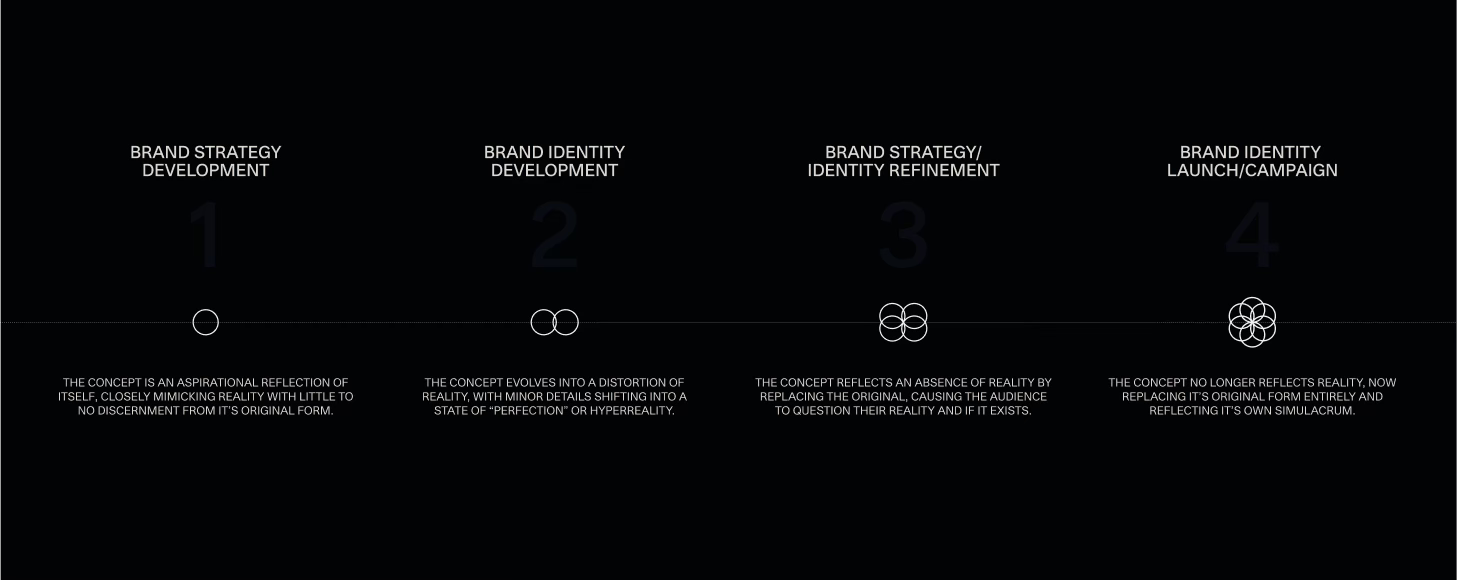
How agencies develop and reinforce simulacra.


I know it’s been a while since I’ve posted anything. I’ve had to process the loss of my grandmother, the loss of a mentor, and a layoff within a year. The past 18 months have been quite a ride, I’ve changed, but I’ve changed for the better. These changes have transformed me emotionally, intellectually, and physically, but most importantly, existentially. As a result I refocused on my core principles and values. I’ve heard of a “quarter-life crisis” but in my 30’s it’s clear that mine came a bit late. Since this existential crisis I have a new priority, to create more purposeful and impactful work. I no longer want to create as a means to an end. And while I hold myself accountable I feel obligated to hold my peers, especially my industry, to the same standards. Consulting agencies are the Goliath’s of my field and oftentimes the only option for creatives to make a decent living. But the complexities of corporate finances and bureaucracy of organizational structure often clouds the creative process. Before I begin ranting in typical ponder.ing fashion let’s talk simulacrum. (Skip to the next paragraph if you’re familiar). Simulacrum is a term coined by French philosopher Jean Baudrillard exploring how symbols and representations lose their original meaning. In postmodern society, we live in a world of hyperreality where simulations replace reality. The distinction between real and simulation blurs, leaving only the representations and images that function as their own reality.
Design pre-dates it’s definition, dating back to Roman stone carvers practicing typography before it was called typography. But in 2024, design is a far cry from the scribes of past centuries and mostly exists within a digital space, with a specific purpose and goal. Many agencies aren’t creating work that references a tangible, real-world object or concept. Instead, they’re creating highly stylized and ostentatious representations that serve as their own new “reality”. When developing a brand identity, you essentially have to sell the client on a direction, this helps give them an idea of what to expect at the end of the project. We imagine what the brand “could” look like, how it “could” show up in the world, and how it “could” sound when communicating. But this aspirational process results in an ecosystem that represents versions of brands which have little to do with what they actually are. In my opinion, modern brand identity development is just the personification of a corporation. I mean what the hell is a brand anyway? Every brand connects to a product or service at the end of the day. So what happens when the brand strategy and identity no longer align with the realities of the product or service? What happens when humans present themselves as brands? What happens when the product is just the idea of a product? Some fashion brands have even gone as far as selling digital garments/objects that do not exist in the real world, and are only visible through VR/AR. But I won’t dig into VR/AR today as it’s too literal and modern consulting is my focus.
With the rise of platforms like Midjourney and Dall-E, anyone can generate imagery within a few seconds and all they need is a prompt. AI-generated images lack direct connections to original works, combining styles from various sources based on the prompt. This creates abstracted standalone realities, as the machine doesn’t understand the context of artists’ styles. Prompt your program of choice to illustrate a field painted by Van Gogh + Monet. The machine will generate an image in their styles (sometimes), but there are discrepancies, the depictions of dimension can differ, or the use of color, resulting in an abstracted and wonky image. Don’t get me wrong, I love the idea of accessible creativity, but I’m also concerned that AI platforms challenge the traditional role of a creative. I believe designers and all creatives translate real world experiences into tangible and relatable visual/sonic forms. And maybe that’s why it’s always obvious when people rely on AI to create for them. It never feels authentic, but at the same time, many agencies lack authenticity too.
It feels like creatives are becoming more reliant on technologies that amplify the hyperreal aesthetics of Baudrillard’s theories. The line between creatives vs non-creatives or real vs simulated is blurred. Some use AI to generate images for non-existent “concept” projects and others for mockups. I’ve seen creative directors upset that AI can’t generate impossible images. The fact is, AI has infiltrated modern agencies, which in turn rely on it, often unconsciously. Publications and awards assumingely feature repetitive logos, typefaces, and brand campaign styles. Agency portfolios seem to follow a specific formula, even their team images appear copy + pasted as if they only hire one kind of person (and perhaps they do). This phenomenon is absolutely linked to simulacrum, as agencies fall deeper into hyper-capitalism, the industry follows suit. The creative process is now prioritized for optimization and profit over visual representations of a brand or real-world experience. Assets are now developed to represent their hyperrealistic context, and it doesn’t stop there. Now as more platforms appear to offer stock imagery, mockups, and design templates (most of which are never inspiring or creative to begin with) but other times, they are so abstracted, they don’t feel real. Why do so many mockups consist of floating devices? Why would I lay my laptop on the grass or throw my phone in the air to capture my screen? Sure it looks cool, but when would that ever happen in real life? The trend of abstracted brand presentation makes me question if I’m looking at legitimate photography or more products of AI. Now platforms like Canva and Adobe Stock democratize design with pre-made templates and stock visuals, but it feels redundant and counterproductive for creative fields. I understand the convenience, but originality is lost, and creativity is reduced to repetitive copies.
Many professional creatives today present themselves in a cookie-cutter branded format, with particular styles, showcasing work in a particular way. Their social media is highly curated, their portfolios revealing little of who they truly are. I too have fallen victim to this before so I cannot judge. But my biggest realization from the past year has been the fact that I am human. My resume, portfolio, or social media may portray me as an art director, designer, creative, or hobbyist photographer, but before any title or role, I’m simply human, I’m not a brand, and I don’t want to be a part of this system anymore. I know I typically close my posts with solutions, but I don’t have one this time. Modern design and creative consulting are often corporate propaganda. How do you combat that? I don’t even know where to start or how to tackle such a leviathan reinforced by over a century of practice. All I know is that after a decade in my field, I refuse to be a creative mercenary working for the highest bidder. I refuse to be part of a system that doesn’t actually exist. I refuse to contribute to the cannibalization of a world I cherish. I believe that modern design can be used for purpose. Creativity can’t be all about optimization and maximum profits, and if it is, then maybe I chose the wrong field.